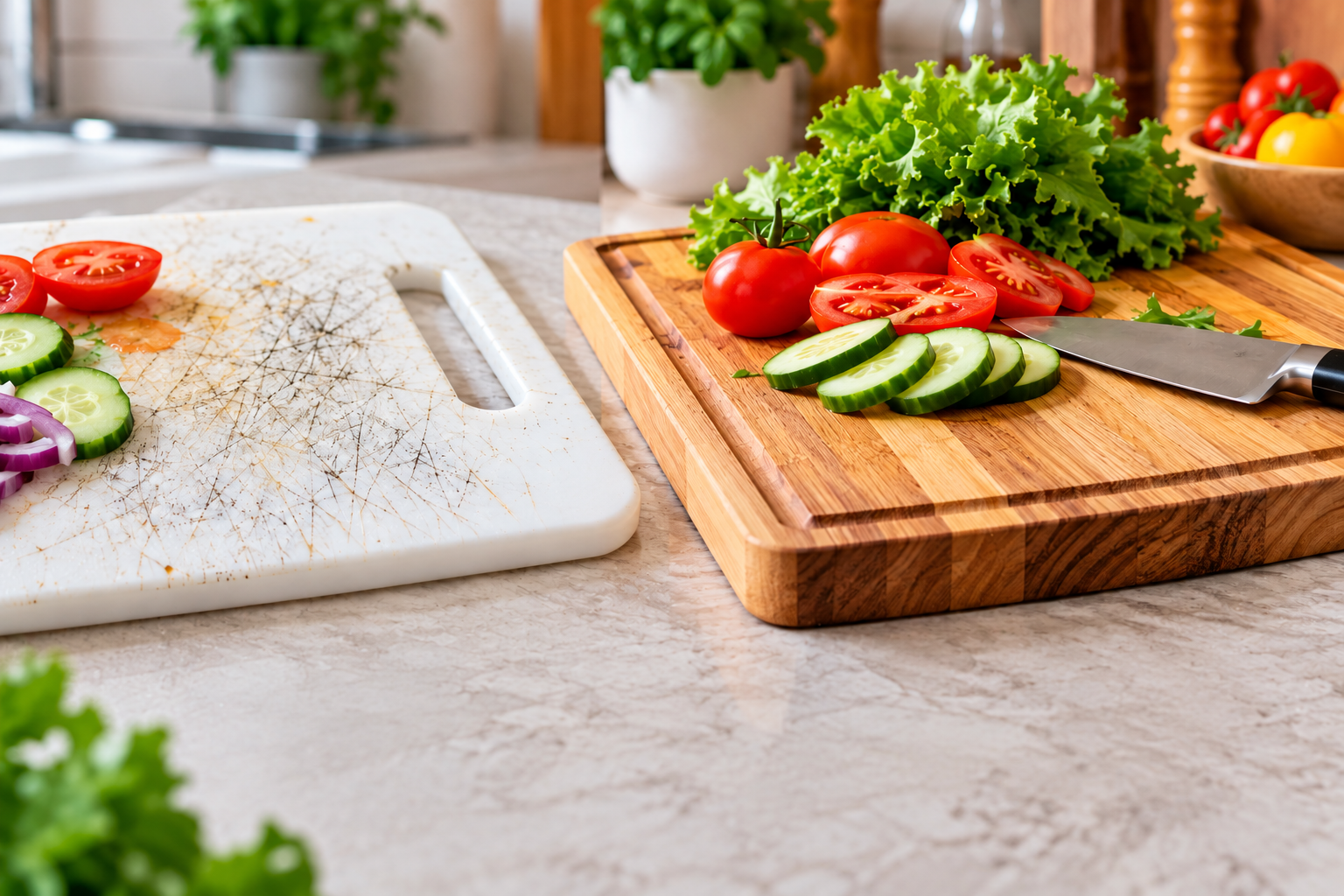
Say Goodbye to Plastic Cutting Boards
For years, plastic cutting boards have been a common choice in home kitchens. They are cheap, lightweight and easy to replace. But there is another material that has been getting more attention from home cooks: wood.
A good wooden cutting board can last for years when it is properly cared for. It also offers a solid cutting surface and can look much better on a kitchen counter than a scratched plastic board.
That does not mean every wooden board is automatically safer or cleaner than plastic. Kitchen hygiene depends heavily on how a cutting board is used, washed and maintained. Still, for people looking for a durable alternative to plastic, a quality wooden cutting board is worth considering.
Why Are People Moving Away From Plastic Cutting Boards?
Plastic cutting boards are convenient, but they can develop deep knife marks after regular use. Those cuts can make the surface harder to clean thoroughly.
A new plastic board usually has a smooth surface. After months or years of chopping, however, it may become covered with grooves and scratches. Food particles and moisture can collect in those damaged areas.
There is also another issue that has attracted attention in recent years: tiny plastic particles created by cutting on plastic boards. Research has found that chopping on plastic cutting boards can contribute to the release of microplastic particles.
This does not mean that using a plastic cutting board automatically makes food unsafe. Proper food handling and cleaning remain important. But for consumers who want to reduce unnecessary plastic contact in the kitchen, choosing another material is an easy change.
Why Wood Is a Popular Alternative
Wood has been used for cutting boards for generations. It is naturally strong, comfortable to work on and can hold up well under daily kitchen use.
Hardwoods such as maple, walnut and cherry are commonly used for cutting boards because they are durable and have relatively tight grain patterns.
One reason wooden boards feel different from plastic is the way the surface responds to a knife. A quality wood board provides a firm cutting surface without feeling overly harsh under the blade.
Wooden boards can also be repaired. Minor scratches and knife marks can sometimes be removed by sanding and refinishing the surface. A plastic board with severe grooves generally does not offer the same opportunity for restoration.
Does Wood Really Last Longer?
A quality wooden cutting board can last many years, and some well-maintained boards can remain useful for decades.
The key is choosing the right type of wood and taking care of it properly.
Wood should not be left sitting in water for long periods. It should also not normally be placed in a dishwasher because prolonged exposure to heat and moisture can cause warping, cracking or splitting.
After washing, the board should be dried thoroughly. Occasionally applying food-grade mineral oil can help prevent the wood from becoming excessively dry.
This simple maintenance routine may sound like extra work compared with plastic, but it can significantly extend the useful life of a wooden board.
Are Wooden Cutting Boards More Hygienic?
This is where things get a little more complicated.
There is a long-standing debate about whether wood or plastic is more hygienic. Some studies have found that bacteria behave differently on different cutting-board surfaces, while other research has highlighted the importance of cleaning practices rather than simply choosing one material.
The important point for home cooks is that a clean cutting board is more important than simply owning a wooden one.
Raw meat, poultry and seafood should be handled carefully, and the board should be washed thoroughly after use. Using separate boards for raw proteins and ready-to-eat foods can also help reduce cross-contamination.
A wooden board that is dirty and poorly maintained is not automatically safer than a clean plastic board.
What About Deep Knife Marks?
Deep knife marks are one of the biggest reasons people eventually replace cutting boards.
On plastic boards, repeated chopping can leave a network of cuts across the surface. If the board becomes heavily damaged, replacing it is often the practical solution.
Wood behaves differently. Small cuts are normal and do not necessarily mean the board needs to be thrown away.
If the surface becomes rough or heavily marked, a wooden board can often be sanded down. After sanding, it can be cleaned and treated with a suitable food-safe oil.
That ability to restore the surface is one of the biggest advantages of investing in a quality wooden board.
Which Wood Is Best for a Cutting Board?
Not all wood is equally suitable for kitchen use.
Maple is one of the traditional choices. It is hard, durable and has a relatively fine grain.
Walnut is another popular option. It is slightly softer than maple and has a darker appearance that many people like.
Cherry is also used for cutting boards and offers a warm color that becomes richer over time.
Bamboo is often grouped with wooden cutting boards, although technically it is a grass. It is hard and renewable, but its construction can vary depending on the product and adhesive used.
For a daily-use board, look for a product specifically designed for food preparation rather than using an ordinary piece of untreated wood.
End Grain vs Edge Grain
If you are shopping for a wooden cutting board, you may notice terms such as end grain and edge grain.
An end-grain board is made with the ends of wood fibers facing upward. These boards are often thicker and can be more expensive.
Edge-grain boards have the long edges of the wood facing upward. They are generally more affordable and can still provide excellent performance for everyday cooking.
You do not necessarily need the most expensive end-grain board to have a good kitchen experience. A well-made edge-grain hardwood board can be perfectly suitable for normal home cooking.
How to Keep a Wooden Cutting Board Clean
Taking care of a wooden cutting board is fairly straightforward.
Wash the board after use with warm water and dish soap. Do not leave it submerged in a sink full of water.
Once washed, dry both sides properly and allow the board to air-dry completely before storing it.
For extra maintenance, use a food-safe mineral oil designed for cutting boards. Depending on how frequently the board is used, it may need oiling when the surface starts looking dry.
Avoid cooking oils such as olive or vegetable oil for routine board conditioning because they can become rancid over time.
If a board develops a deep crack, severe warping or damage that cannot be properly cleaned, replacing it is the safer choice.
Should You Completely Throw Away Your Plastic Board?
Not necessarily.
Plastic cutting boards still have useful advantages. They are inexpensive, lightweight and generally easy to clean. They can also be useful when handling raw meat because they are simple to replace when they become heavily scarred.
Instead of treating the choice as wood versus plastic, many home cooks can use both.
For example, a household could use a wooden board for vegetables, bread and general preparation while keeping a separate plastic board for raw meat and poultry.
The most important thing is to keep boards clean, replace badly damaged ones and avoid cross-contamination.
The Bottom Line
Wooden cutting boards are making a comeback for good reasons. They are durable, repairable and can provide a comfortable surface for everyday cooking.
They do require more care than a basic plastic board, but that maintenance can help a quality wooden board stay useful for many years.
Plastic is not automatically dangerous, and wood is not automatically cleaner. Good kitchen hygiene still comes down to proper washing, drying, food separation and replacing boards when they become excessively damaged.
For anyone looking to reduce plastic use and invest in a long-lasting kitchen tool, however, a well-made hardwood cutting board can be a practical choice. It is one of those simple kitchen upgrades that can combine durability, function and a more traditional cooking experience.