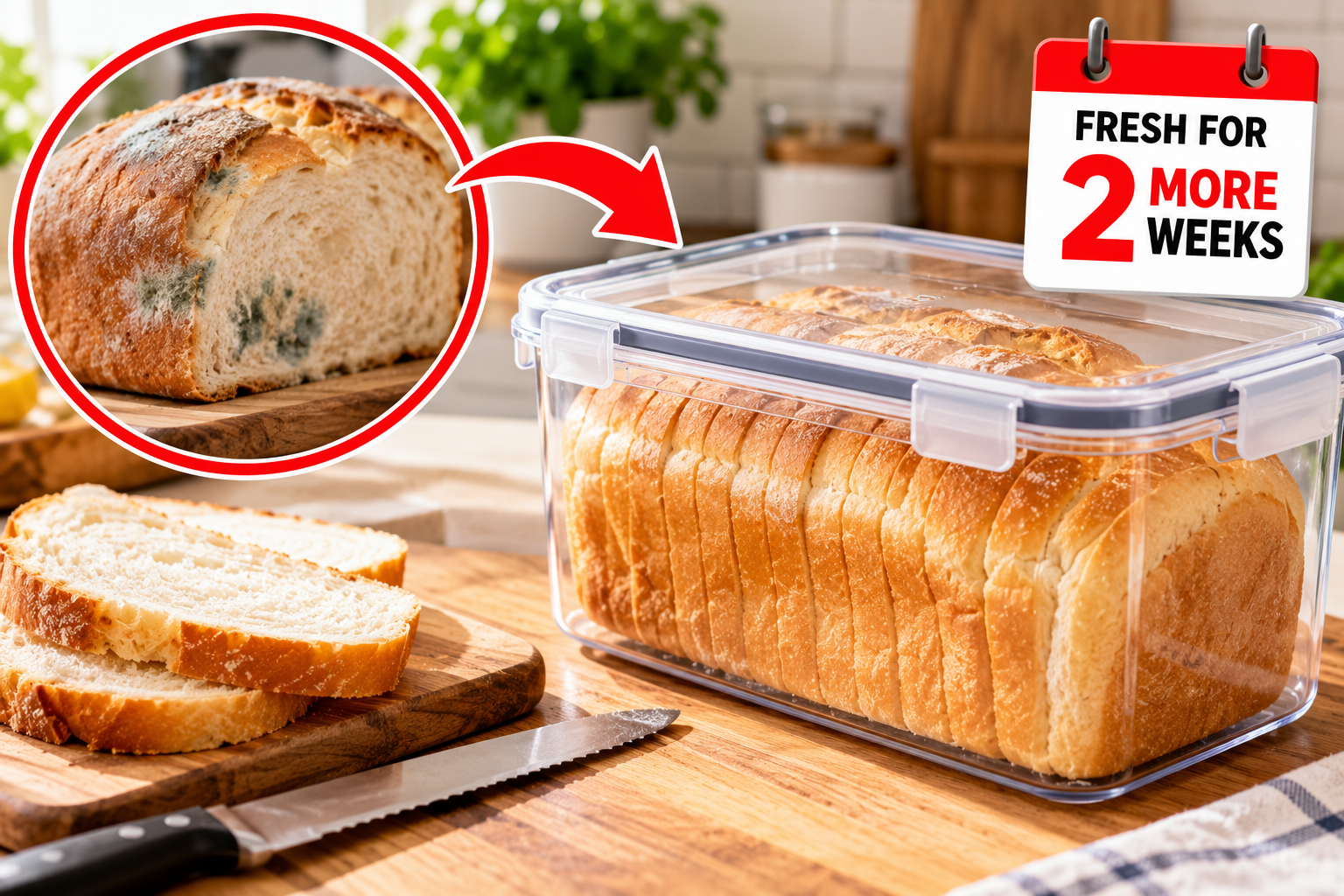
There is nothing quite as disappointing as buying a fresh loaf of bread, only to find it dry, hard or covered with mold a few days later.
Bread seems like one of the simplest foods to store, but where and how you keep it can make a surprising difference. Leaving it uncovered on the kitchen counter can quickly dry it out, while putting it in the refrigerator can make it stale faster.
So what is the trick to keeping bread fresh for longer without freezing it?
The answer is not one secret ingredient or a fancy kitchen gadget. It comes down to controlling moisture and air exposure. For many soft breads, keeping the loaf tightly sealed at room temperature can help preserve its texture for several days. Some specially made breads, including certain sourdough and tangzhong-style loaves, can stay soft for around a week under the right conditions.
A full two weeks is not a realistic guarantee for ordinary sandwich bread, though. Bread type, temperature and humidity all play a major role.
The Simple Trick: Keep the Bread Airtight
The biggest mistake people make is allowing too much air to reach the bread.
Once bread is exposed to air, moisture slowly escapes from the crumb. That is one reason a loaf that felt soft and fresh on the first day can become noticeably harder later.
For soft sandwich bread, one of the easiest methods is to keep it in an airtight bread bag or another well-sealed container at room temperature.
King Arthur Baking recommends airtight storage for soft sourdough bread and notes that this can keep it fresh for up to a week at room temperature.
The important part is the seal. A loose paper bag may look traditional, but it does not provide the same moisture protection.
If your priority is keeping the inside soft, a properly sealed bag is generally more useful than allowing the loaf to breathe freely.
There Is a Better Way to Slice Your Loaf
Here is a small trick that many people overlook.
Instead of slicing from one end of the loaf, cut the bread from the middle.
After taking the slices you need, push the two remaining halves back together so the cut sides are touching. Then seal the loaf again.
Why does this help?
Every time you expose a large cut surface to the air, you create another place where moisture can escape. Pressing the two cut sides together reduces the exposed area.
King Arthur Baking recommends this approach as one way of retaining moisture in a loaf for longer.
It is especially useful if you buy a whole loaf and only eat a few slices at a time.
Don’t Put Your Bread in the Refrigerator
This may sound strange because the refrigerator is where many people store food they want to keep fresh.
Bread is different.
Refrigerating bread can actually make it become stale more quickly. The lower temperature encourages changes in the starch structure that make the bread feel firmer and less fresh.
Utah State University Extension also recommends storing bread at room temperature rather than in the refrigerator because refrigeration can cause bread to become stale faster.
King Arthur Baking gives similar advice, explaining that refrigeration can speed up staling, while freezing is the better option for long-term storage.
There is one exception.
If your kitchen is extremely hot and humid and bread is developing mold very quickly, refrigeration can be useful to slow mold growth. The downside is that the bread may become stale, so toasting or reheating it can improve the texture.
Keep Bread Away From Heat and Sunlight
Even a perfectly sealed loaf can struggle if it is stored in the wrong location.
Avoid placing bread beside a stove, oven, sunny window or other warm area. High temperatures can increase the chance of mold, particularly in humid conditions.
A cool, dark cupboard or pantry is generally a better location.
A traditional bread box can also work well, provided it gives the bread suitable protection without creating excessive moisture buildup.
The goal is to find a reasonably cool place away from direct sunlight and heat.
The Type of Bread Makes a Big Difference
Not all bread has the same shelf life.
A basic homemade loaf may begin losing its freshness after a few days. Some commercial sandwich breads contain ingredients and preservatives designed to extend shelf life.
Sourdough is another interesting option.
Its acidity can help slow mold growth and may also slow some of the processes responsible for bread becoming stale. King Arthur Baking notes that sourdough can naturally stay fresh longer than standard yeast bread.
Another option is bread made using the tangzhong method.
Tangzhong is a Japanese bread-making technique in which part of the flour and liquid is cooked together before being added to the dough. The method helps create a softer loaf and can improve its shelf life.
King Arthur Baking says a well-wrapped tangzhong-style loaf stored at room temperature can stay soft for up to a week.
That makes bread choice an important part of the storage equation.
What About a Bread Box?
A bread box can be useful, but it is not magic.
Its main job is to create a suitable environment that protects bread from excessive air movement, light and heat while allowing some ventilation depending on its design.
For crusty artisan bread, the storage strategy can be different from soft sandwich bread.
A crusty loaf needs some airflow if you want to preserve its crust. Completely sealing it can soften the crust because moisture from the inside migrates toward the surface.
King Arthur Baking recommends different approaches depending on the type of bread, with airtight storage generally preferred for keeping soft bread moist.
So before choosing a storage container, think about what kind of bread you are actually storing.
Don’t Seal Bread While It Is Still Warm
This is another easy mistake.
Freshly baked bread should be allowed to cool completely before being sealed.
If a warm loaf is placed directly into an airtight bag or container, steam can become trapped inside. That extra moisture can create condensation and potentially encourage mold growth.
King Arthur Baking specifically recommends allowing bread to cool completely before airtight storage or freezing.
If you bake your own bread, give it enough time on a cooling rack before putting it away.
It may be tempting to bag it while it is still warm, but waiting can help protect the loaf.
Can You Really Keep Bread Fresh for Two Weeks?
This is where the popular “two-week bread trick” needs a little reality check.
For ordinary bread stored at room temperature, there is no universal method that guarantees two weeks of freshness.
Some specialty breads can last significantly longer than others, and certain enriched or specially formulated loaves may remain soft for a week or more. But temperature, humidity, ingredients and storage conditions all matter.
King Arthur Baking generally recommends freezing bread when it needs to be stored for longer than a few days, particularly for homemade loaves.
So if someone promises that a simple container will keep every loaf perfectly fresh for 14 days, it is worth being skeptical.
The better approach is to extend freshness as much as reasonably possible without creating a food-safety problem.
What to Do If Your Bread Starts Going Stale
Bread that is slightly stale does not always need to go straight into the trash.
A quick toast can bring back some of its appeal. Slices can also be used for French toast, breadcrumbs, croutons or grilled sandwiches.
For a larger crusty loaf, lightly adding water to the surface and reheating it can help refresh the crust and crumb.
But there is an important difference between stale bread and moldy bread.
If you see visible mold, do not simply cut off the affected section and eat the rest. Mold can extend beyond what is visible on a soft food such as bread.
When in doubt, throw the loaf away.
The Best Bread Storage Routine
If you want your bread to stay fresh as long as possible without freezing, keep the routine simple.
Let freshly baked bread cool completely before storing it. Keep soft bread in a tightly sealed bag or container at room temperature. Store it somewhere cool, dry and away from direct sunlight.
If you have a whole loaf, consider slicing from the middle and pressing the remaining halves together after taking what you need.
Avoid the refrigerator unless your kitchen conditions make mold a bigger concern.
And if you regularly find that a loaf cannot be eaten before it starts to spoil, consider buying a smaller loaf rather than trying to stretch its shelf life indefinitely.
The Bottom Line
There is no single magic trick that can guarantee ordinary bread will stay perfectly fresh for two weeks without freezing.
But a few simple habits can make a noticeable difference.
Keep soft bread airtight, store it at room temperature, protect it from heat and sunlight, and minimize the exposed cut surface. Choosing naturally longer-lasting breads such as sourdough can also help.
Most importantly, don’t confuse softness with safety. A loaf that is a little stale can often be revived with toasting or reheating, but bread showing signs of mold should be discarded.
With the right storage routine, you may get several extra days of good-quality bread without relying on the refrigerator or freezer. And sometimes, that simple change is all it takes to waste less bread and enjoy more of every loaf.